Russian-Speaking Elderly Fall Into Trap: The Scam Impersonating National Insurance and Tax Authority
How scammers exploit language and cultural gaps to steal from veteran immigrants — and what families can do now

Rina, 73, an immigrant from Russia, sat in her kitchen holding the phone in trembling hands. A pleasant, professional voice spoke in flawless Russian: "Ma'am, I'm calling from National Insurance. There's a problem with your file, a payment didn't go through. If we don't sort this out now, your benefits will be canceled." She panicked. She didn't want to bother her children, they're so busy. The number on the screen looked official. The voice was so convincing.
18,000 shekels were transferred that day. Only when the bank blocked the account and Avi, her son, came to check, was the trap revealed. Rina isn't an isolated case — she's one of dozens of Russian-speaking elderly who have fallen victim in recent weeks to a sophisticated, coordinated, and cruel scam.
Why Russian-Speaking Elderly Became the Primary Target
The scammers don't choose their victims randomly. They do cold, precise research. Russian-speaking elderly are at the intersection of interconnected risk factors.
Language barrier: Most elderly who immigrated from Russia in the 1990s don't speak fluent Hebrew in real-time conversation. When a call comes in perfect Russian from an "official representative," it feels safe. It feels real.
Trust in official institutions: In Russian culture, government is authority. If someone says they're from the state, you don't question it. This reflex, ingrained over decades, doesn't disappear when you move to Israel.
Technological isolation: A significant portion of the elderly don't use family WhatsApp groups, don't search online, and don't know what caller ID spoofing (identity falsification) is. They're not exposed to updated information about new scams.
Family shame: "I don't want to bother the kids," "What will they say, that I'm no longer capable?" This shame is a tool scammers exploit ruthlessly — precisely to prevent the victim from seeking help in the moment.
How the Scam Works: The Exact Russian Script
Every successful scam is based on a polished script. Here are the stages:
Stage 1: The call comes from a number that looks identified. The screen reads "National Insurance," "Tax Authority," or a number that looks governmental (for example, 02-6708000). The victim answers and hears in perfect Russian: "Hello, ma'am, this is National Insurance calling."
Stage 2: The scammer says there's a "problem with your file." Maybe a payment that didn't go through, maybe excessive eligibility, maybe "someone tried to use your details." The tone is professional, like a real government employee.
Stage 3: Emotional pressure. "If you don't handle this now, you'll lose your benefits. There's a procedure that needs to be completed today, otherwise a hefty fine will come." There's always a ticking clock.
Stage 4: Request for action. "You need to transfer a temporary amount to an account to verify identity," or "A courier will come to take your card for verification," or "Send me the verification code you received by SMS."
Stage 5: The victim takes action without consulting family. They feel pressure, fear, and above all, misplaced trust that this is really the government.
When Avi asked his mother why she didn't call him, Rina said: "They said it was confidential, that it was just between me and them."
The Exact Signs: How to Identify the Scam
Sometimes parents won't say directly that they fell into the trap. They're ashamed, or think they can still "fix it alone." But there are signs you can identify:
Bank account suddenly empty or blocked. If parents always paid bills on time and suddenly there's a problem with the credit card, that's a sign.
Frequent phone calls they don't explain. "Who was that?" "Oh, nothing important, wrong number." If it repeats, it's not a wrong number.
Uncharacteristic nervousness or secrecy. Parents who usually share their day suddenly close the door for calls, seem worried, avoid eye contact.
"Official" letters that can't be verified. Letters with fake government symbols, unusual requests. National Insurance and the Tax Authority don't send letters denying you to transfer money to a private account.
Behavioral change. General fear of the phone, refusal to leave the house. This isn't just age, it's the result of psychological trauma.
If you see even two of these signs, don't wait. Open a sensitive conversation.
What the Family Can Do Now: A Practical Guide for a Sensitive Conversation
Start without blame. "Mom, I want to talk to you about something that's happening to a lot of people now. It's not about you, it's about very sophisticated scams." Don't turn it into judgment.
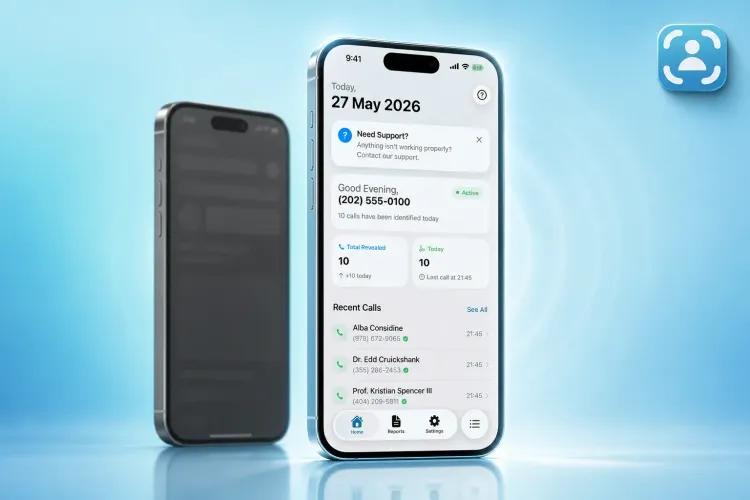
Offer simple technological protection. "There's an app whose entire job is to identify who's really calling. It exposes fake numbers in a second. I want to install it for you so you'll be protected." This isn't something that hurts independence, it's like a lock on the door.
Create a family whitelist. "From now on, if someone calls that you don't know, we agree you won't answer. Or you answer and say: wait, I'm calling my son to check." This is protection, not limitation.
Add yourself as contacts for bank alerts. Ask the bank to send you SMS for every transfer above an amount you set. It doesn't interfere with independence, but gives you peace of mind.
Guide in simple language and reinforcement. "No authority will ask you for money over the phone. Ever. If someone tells you 'transfer money now,' it's a scammer."
And Avi said that what helped his mother most wasn't the technology. It was when he told her: "Mom, I'm not angry at you. I'm angry at the scammers. And I'm here to make sure this doesn't happen again."
How to Distinguish: Real National Insurance vs. Scam
| Criterion | Real National Insurance/Tax Authority | Scam |
|---|---|---|
| Language | Mainly Hebrew, translation only in writing via the website | Fluent Russian, "too pleasant" |
| Contact method | Registered mail, SMS notice with link to verified government site | Phone call without prior notice |
| Request for money | Never by phone, only through official procedure or court | "Transfer now to this account" |
| Time pressure | You can always request delay, consult, get free advice | "If not now, you'll lose eligibility" |
| Phone number | Appears on official .gov.il site, can be verified | Regular number, changing, doesn't appear in official notices |
If you have doubt, go to a National Insurance branch or call the official hotline listed on the website. You don't need to decide during the call.
What to Do: Immediate Steps If It Already Happened
- Don't blame. The elderly person already feels shame and fear. Empathy first.
- Document. Save the phone number that called, date of call, name of "representative," amount transferred, destination account.
- Call Israel Police (100) and file an immediate complaint. The more time passes, the harder it is to trace the money.
- Contact the bank. Notify them immediately that it's a scam. They may be able to block the transfer if it's still in process.
- Install protection. Install Traceback on the parents' phone so this doesn't happen again. It exposes caller ID spoofing (fake numbers) within 1.3 seconds.
- Maintain documentation. Report from the bank, report from police, records of suspicious calls. This is required for legal or insurance situations if needed.
Questions and Answers Families Ask
Are these scams limited to the Russian community?
No. The same tactic affects other immigrants as well, but the Russian community is overrepresented in police complaints due to population size, the language gap, and a culture of trust in institutions. The scammers follow the numbers.
Can an elderly person cancel a money transfer?
It depends on timing. If the transfer hasn't yet cleared, the bank can try to block it. If the money already reached a foreign account or was merged through a network of accounts, recovery is very difficult. It's important to act within the first 24 hours.
How can an app prevent such scams?
Traceback exposes caller ID spoofing — meaning, when a scammer calls as "National Insurance" but their real number is different, the app will show the real number within 1.3 seconds. It also lets you set automatic alerts so you won't miss a suspicious call. For details on how it works: il.trytraceback.com/#how-it-works
What do you do if parents refuse to install an app?
This happens a lot. Suggest alternatives:
- Family list: Only pre-approved numbers. Any other call, they don't answer.
- Family Link or Screen Time: Connect their phone to yours to see incoming calls.
- Bank alerts: Ask their bank to send you alerts for any high transfer.
How can I teach my parents without hurting their independence?
Start with "I want you to know" not "you're not capable." Describe it as technology that even young people need to learn. Walk them through installation, but don't take control from them. Let them do the action themselves, you're just guiding.
How do I verify a call if I'm not sure?
National Insurance and the Tax Authority publish official phone numbers on their websites (.gov.il). You can search "National Insurance phone in Russian" and compare the number that called to the official number. If the number doesn't appear in a government notice, it's a scam. Don't rush to decide during the call itself — you can always say "I'll get back to you" and check.
The Story Doesn't End at 18,000 Shekels
Rina recovered some of the money with the bank's help, but not all of it. What she didn't recover is peace of mind. She no longer answers calls like she used to, she's tense when the phone rings, and still feels shame every time someone asks "what's going on?"
Avi installed Traceback for her. He also added himself to bank alerts. And he told her: "Mom, this isn't a sign you're not capable. It's a sign that I love you."
This scam won't disappear. There's too much money at stake, too many victims. But you can do something now, without waiting for law or police operation. Talk to your parents, install an app, set up alerts, and do it without hurting their dignity.
Because it's not just money. It's security. It's peace of mind. And it's something no scammer can take from you if you look out for each other.
If your parents are receiving suspicious calls, install Traceback for them today — 3 free trial days with subscription, automatic blocking of caller ID spoofing, and reports you can use to document harassment. You don't need to be an expert to protect your family. For more details: il.trytraceback.com/pricing
⚠️ Disclaimer: This article is general information only and does not constitute legal advice. For any specific legal situation, consult a qualified attorney. Traceback is not responsible for legal outcomes.