Senior Journalist Almost Lost Everything: The Sophisticated Phone Scam Spreading Across Israel
A true story of someone who thought he was immune—and why you're not either


"Wait, I'll Call You Back" – The Sentence That Saved Me 87,000 Shekels
Wednesday, 2:23 PM. The phone rings. On the screen: my bank. I'm a 47-year-old journalist. I've written exposés on scams, interviewed former con artists. I know how this works.
Four minutes later, I stood with my finger hovering over the "Approve" button in my banking app, seconds away from transferring 87,000 shekels to an unknown account. Heart pounding. Sweat on my forehead. And a small inner voice screaming: Something here doesn't add up.
I wasn't stupid in that moment. I was exactly what the scammers wanted: a regular person, busy, who trusts his own intuition.
"I Don't Fall for This Crap" – Until You Do
The call started with my full name, the last four digits of my ID number, and a sharp question: "Sir, did you just approve a transfer of 12,340 shekels to an account at Bank Leumi?"
I hadn't approved anything. And I said so.
"Exactly," said the professional voice on the other end. "We have suspicious activity on your account. Someone tried to access it with your credentials 11 minutes ago from a computer in Haifa. Are you in Haifa right now?"
I'm in Tel Aviv. My heart started beating faster.
The representative "helped" me. Explained that I needed to transfer the balance to a protected temporary account "until the criminal division handles the breach." Gave me a reference number. Quoted Bank of Israel regulations. Then said the sentence: "We have 90 seconds to execute this before the system locks automatically."
I opened the app. Typed the amount. Heard his voice guiding me: "Yes, now press 'Transfer'..." and then, a second before I clicked, I noticed he said "press" before I told him what I was seeing on the screen.
How did he know?
I hung up. Called the bank through the official number. There was no suspicious activity. The voice, the screen showing "The Bank" – it wasn't the real number.
Five minutes. That's what it took for an experienced journalist who's written about scams to stand on the brink of financial ruin.
The Tactics That Work on Smart People Specifically
I checked sources. Talked to investigators. And understood something disturbing: smart people fall for these scams more, not less.
This isn't a bug – it's a feature.
Scammers use Authority Exploitation. When the screen displays "Bank Leumi" and the voice sounds professional, your brain bypasses the analytical system and switches to "obey instructions" mode. This isn't stupidity – it's evolutionary programming. We're wired to trust authority.
Time Pressure Engineering – time pressure disables the prefrontal cortex, the part of the brain responsible for rational decisions. "90 seconds before lockdown" is a precise choice: short enough to make you act automatically, long enough not to suspect an error.
Information Asymmetry – the scammer knew about me: full name, ID number, bank. How? Data leaks from 2019, public records, darknet databases. 500 shekels buys you details on 10,000 Israelis. When someone knows more about you than you think they know, the brain assumes they're legitimate.
Reciprocity Manipulation – the representative "saved" me. Said "I'm here to protect your money." The brain activates a social debt mechanism – if someone helps, I must cooperate.
Confidence Bias – smart people are confident they'll spot a scam. "I don't fall for this crap" – the sentence I told myself hundreds of times. This confidence makes you the perfect victim, because you don't activate caution protocols.
How This Scam Works Step by Step
Step 1: Pre-Collection of Information
Scammers buy databases from old leaks (the 2019 Population Registry leak, cellular provider leaks), browse public records (Registrar of Companies), and scan social media profiles. They know before the call: your bank, the area you live in, identifying details.
Step 2: Phone Number Spoofing (Caller ID Spoofing)
Online services allow spoofing of caller ID for a few cents per call. You enter the number you want to display, and the international telephone system displays it on the screen. It's not illegal in every country, and it's not something banks can block – the problem is in the international network.
Step 3: The Precise Script
- Opening with full name + identifying detail (4 digits of ID)
- Sharp question: "Did you just approve a transfer of X shekels?"
- When you say "no": "Exactly, there's suspicious activity"
- Technical explanation: "security breach", "Bank of Israel protocol"
- Solution: "Transfer to protected temporary account"
- Time pressure: "90 seconds before automatic lockdown"
Every sentence is calculated. Every pause is intentional.
Step 4: The Escalation
The scammer guides you to open the banking app and execute a transfer. He'll say "yes, right, now you'll see a blue button..." – he's not seeing your screen, he simply knows what the app looks like. This creates the illusion that he's "inside the system."
Step 5: The Finish
The moment you approve – the scammer disconnects. The money goes to an intermediary account, is converted to foreign currency or funneled through crypto. Within 20 minutes the money is no longer in Israel.
Common Variations:
- SMS with a link to "approve transaction" (phishing for login credentials)
- Call from "Visa" about a suspicious card transaction
- Impersonation of "technical support" regarding iCloud account
- "Israel Police" with a claim about a search warrant
What to Do If This Is Happening to You Right Now
If you're on the phone right now:
Say "I'll call you back" and hang up. Don't explain. Just disconnect. Scammers are trained to handle any resistance.
Look up the official number on the bank's website. Not on Google – Google sometimes displays fake ads. Go directly to the official site (type manually in the browser) and find "Contact."
Call through the official number and ask: "Did you call me 5 minutes ago?" The answer will always be "no." If there was a real problem – it will wait.
If you transferred money – call the bank within minutes. Request urgent blocking of the transfer. There's a small chance (5-10%) the money hasn't left the system yet.
Report to the police. Even if it seems useless, it creates a file, enables an insurance claim, and helps with statistics.
If you received an SMS from a familiar-looking parameter:
- Don't click on links. Even if they look official. The link can lead to a fake site.
- Check the sender's address. If it says "Bank Leumi" but the number is from abroad or a random string – it's a scam.
- Call the company directly through the official number on the website. Don't use the number inside the SMS.
- Log into the official app, not through a link. If there's a real problem, it will appear there too.
Real-time identification of suspicious numbers:
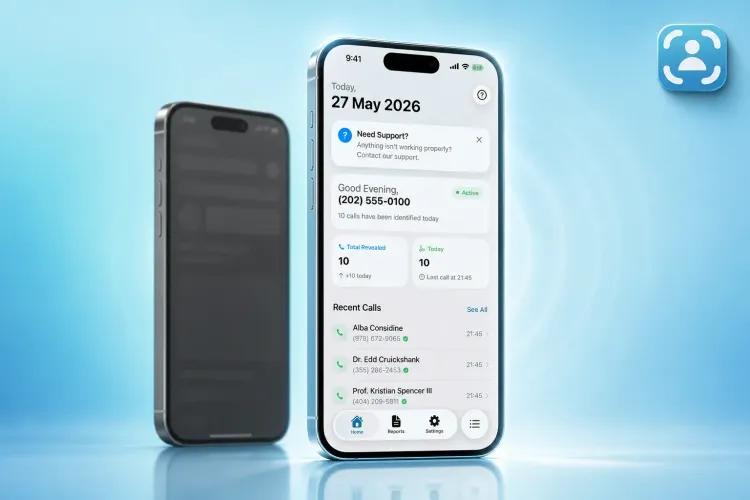
Identification apps like Traceback display a real-time alert if the number is spoofed or reported as suspicious. They work with all providers in Israel (Partner, Cellcom, Pelephone, Hot Mobile, Golan, Rami Levi, 019, 012). If the number looks familiar but behavior is strange – hang up. The bank won't ask you to transfer money over the phone.
The Real Lesson – And Why This Keeps Working
In 2023, over 3,200 people in Israel fell victim to phone scams, with cumulative damage of 47 million shekels. Average per victim: about 15,000 shekels. 68% of victims defined themselves as "aware of risks."
Scams are becoming sophisticated because the technology is cheap. Phone number spoofing is a service found in dozens of countries. Data databases are sold on the darknet at low costs.
The real gap isn't between "smart people" and "stupid people." It's between those who have a protocol and those who rely on intuition.
After my incident, I changed three things:
- Every call from the bank ends with "I'll call you back" – I always hang up and call myself.
- I saved all official numbers in contacts – so I know for certain who's calling.
- I installed an app that identifies spoofing – immediate alert when a number is fake.
This isn't about intelligence. It's about awareness and discipline.
FAQ
How do scammers spoof my bank's phone number?
They use technology called Caller ID Spoofing. There are online services that allow entering any number as the "source number" in a call. The international telephone system displays that number on your screen. The bank can't prevent this because the problem is in the international network, not in your phone.
Why doesn't the bank block this?
The bank has no control over what's displayed on your screen for incoming calls. This is a telephone network problem. Telecom providers can block specific numbers after reports, but scammers simply change numbers.
What do I do if I already transferred money to a scammer?
- Call the bank immediately through the official number. Request urgent blocking of the transfer. There's a small chance the money hasn't gone through yet.
- Report to the police – open a file. This is a condition for an insurance claim if you have coverage.
- Contact the Consumer Protection Authority – report the incident.
- Follow up on the file – sometimes foreign police arrest scammer networks and return funds. It's rare, but happens.
How can I know if it's really the bank?
You can't be sure from the displayed number. The only solution: Always hang up and call yourself to the official number from the bank's website. If it's a real call – it will wait.
What's the difference between an SMS scam and a call scam?
With SMS you see text and have time to think. You can check the sender's number and search online. In a call there's real-time pressure, a convincing voice, and you don't have time to think. Your brain switches to "obedience" mode.
Do caller ID apps help?
Yes, especially those available in real-time that identify spoofed numbers. Traceback works with all providers in Israel (Partner, Cellcom, Pelephone, Hot Mobile, etc.), reveals no-caller-ID numbers within 1.3 seconds, and displays an alert if the number is reported as suspicious. It doesn't prevent 100% of scams, but it's a significant protective layer. There's a 3-day free trial on monthly and annual plans.
The Sentence That Will Save You
Now, two years later, I still feel my pulse rise when the phone rings from an unknown number. This isn't paranoia – it's the correct response.
This scam doesn't depend on your stupidity. It depends on the moment when you're tired, stressed, or just distracted. And then, the scammer will be there with the perfect script, the calm voice, and the precise details.
The one action you'll take now:
Open your phone's contacts and save the official numbers of your bank, credit card, and service providers. Next time someone calls "from the bank" – you'll know for certain if it's the real number. And if not – hang up and dial yourself.
If you want an additional protective layer, services like Traceback expose fake numbers in real-time. There's a 3-day free trial on monthly and annual plans – no commitment. Regular subscription: 14.90 NIS per week / 29.90 NIS per month / 249.90 NIS per year – unlimited identifications.
This won't happen to you because you're careful.
This will happen to you because someone very professional is planning exactly how to bypass your caution.
The sentence that will save you is: "I'll call you back" – and then hang up.
That's all.
Quick Summary:
- A senior journalist almost transferred 87,000 NIS in a sophisticated scam within 4 minutes
- Scammers spoof bank phone numbers and use time pressure + precise personal information
- Smart people fall for it more due to overconfidence
- The only protocol that works: always hang up and call yourself to the official number from the website
- If you transferred money – report to the bank within minutes, not hours
⚠️ Disclaimer: This article is general information only and does not constitute legal advice. For any specific legal situation, consult a qualified attorney. Traceback is not responsible for legal outcomes.