How to Spot a Scam Call in 10 Seconds: A Quick Guide for All Ages
3 simple questions that expose any phone scam—even for the non-tech-savvy


Why the "10-Second Rule" Works When Long Explanations Fail
The scammer counts on you freezing in shock. On you obeying out of fear. On you getting confused by the flood of information they throw at you in one breath. They know you don't have time to think, to Google, to consult someone.
Most scams in Israel use the same psychological script: urgency (now or it's too late) + authority (National Insurance, Tax Authority, the bank) + a request to enter data or click something. It doesn't matter if it's impersonating National Insurance, the Tax Authority, fake Pango, or Visa card fraud. The pattern is identical.
Instead of memorizing "what is spoofing" or "what does a real government office number look like" (information most people will forget within a minute), we're offering something simple: three filtering questions. If even one of them returns a positive answer, it's a scam. Period.
This works for your mom, for grandma who doesn't touch a smartphone, for the 16-year-old son who thinks he's smart, for the Russian neighbor who only speaks Russian. Everyone can apply this.
The Three Questions (Tailored to the Most Common Scripts in Israel)
1. Is the Caller Demanding Immediate Action and Threatening Account Closure, Indictment, or Service Blocking?
If the answer is yes — it's a scam.
Government agencies, banks, and legitimate companies don't close accounts, file indictments, or block services through a cold call. They send an official letter, direct you to an app or website, or invite you to a branch.
What to do: Say "I'll call back at the official number" and hang up. Immediately. Don't argue. Don't explain. Just hang up.
2. Did They Ask You to Type a Verification Code, SMS, or Click a Link "to Cancel the Charge"?
If the answer is yes — it's a scam.
A legitimate entity doesn't send links during a call. They don't ask you to type a verification code that arrived via SMS. They certainly don't tell you "click the link in the email we just sent to cancel the charge."
What to do: Got an SMS with a code? Don't read it aloud. Hang up immediately. If they mentioned a link — don't touch it. Open the official app of the bank or government office and check there if there's actually something.
3. Does the Number on the Display Look "Almost Right" or Is There Strange Background Noise?
If the answer is yes — it's a scam.
The number on the display shows 5678* instead of your bank's exact number? There's strange background noise, double echoes, or suspiciously artificial silence? This is spoofing — caller ID forgery. The scammer purchases an adjacent number or uses VoIP technology to display a fake number.
What to do: Open the bank or government office app. Look at their official messages or call numbers. Call there directly. Don't trust the display.
Comparison Table: Impersonator vs. Legitimate Entity
| Characteristic | Scam (Fraudster) | Legitimate Entity |
|---|---|---|
| Opening | "You have a debt / charge / urgent indictment" | "Hello, this is customer service. Did you contact us?" |
| Request | "Type a code / click a link / give CVV" | "Go to the branch or app" |
| Time Pressure | "Now or the account will be closed" | "Can be handled within 7 business days" |
| Display Number | Close to the official number but not identical | The exact number from the website |
| Background Noise | Artificial silence or double echoes (VoIP) | Natural call center noise or normal silence |
How Traceback Exposes Fake Numbers in a Second
After identifying the scam using the three questions, you want immediate confirmation: is this a real or fake number?
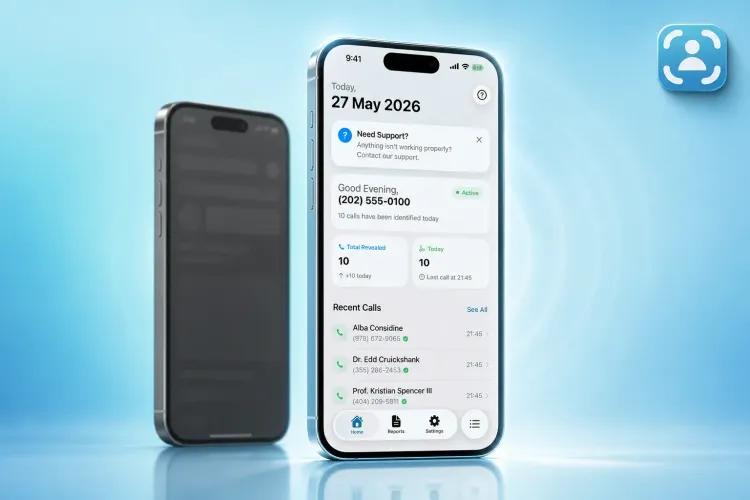
Traceback reveals within 1.3 seconds the real number behind any impersonation. It works on all major carriers in Israel: Partner, Cellcom, Pelephone, Hot Mobile, Golan, Rami Levy, 019, 012.
The report the app provides shows:
- Subscriber name or registered company
- Carrier
- Geographic location
- Previous call records (if available)
The report allows you to document the harassment or scam attempt and take action against it.
The app is available for iOS and Android. Pricing includes unlimited access to lookups in every package: 3-day free trial (monthly and annual packages), weekly package at 14.90 NIS (no trial), monthly at 29.90 NIS, annual at 249.90 NIS. Cancel anytime, no commitment. Join Traceback.
Quick Summary (to Share on WhatsApp with Family):
✅ Immediate urgency + code demand = scam. Always hang up and call the official number.
✅ Link in SMS "to cancel charge" = phishing. No organization sends links during a call.
✅ "Almost right" number on display = spoofing. Open the official app instead of trusting the display.
✅ Traceback exposes a fake number within 1.3 seconds — database of all Israeli carriers.
Now your mom, grandpa, the Russian neighbor, and the 16-year-old son know exactly what to do in 10 seconds. Share this guide. Stick the three questions on the fridge. Let family members try Traceback for free (3 days, monthly or annual package). Because the next scammer won't wait for you to learn technology—they want you to act out of fear. You want to act on information.
⚠️ Disclaimer: This article is general information only and does not constitute legal advice. For any specific legal situation, consult a qualified attorney. Traceback is not responsible for legal outcomes.