How to Call from a Private Number: #31# Code, iPhone, Android & Landline
All the ways to hide your number in Israel, what costs money, and when your private call won't actually stay private

Want to call someone without your number showing up on their screen? In Israel, there are three main ways to do this: a one-time code before the number, a permanent setting on your phone, or permanent blocking through your carrier. In this guide, we'll cover each method, explain what costs money and what's free, and detail when your private call won't actually work-or when the other party can still find out who called.
The Quick Way: #31# Code Before the Number
The simplest way to hide your number for a single call is to dial #31# immediately followed by the number you're calling, with no space.
Example: To call 050-1234567, dial #31#0501234567.
A few things worth knowing:
- It's free. Cellcom notes in its general tariff that on most mobile devices you can block caller ID for a single call for free using #31#.
- It applies only to this call. Your next call will display normally unless you enter the code again.
- Watch for typos. If the code is entered incorrectly, the call may go through as usual with your number visible. If staying private is important to you, double-check what you typed before pressing dial.
- #31# is a standard GSM code, so it should work on all cellular networks in Israel. If it doesn't work for you, contact your carrier's customer service.
What About *43?
Some carriers also offer a 43* code for blocking caller ID on a single call, but it may be charged. In Pelephone's 2017 tariff, for example, it appears at a cost of one shekel per call, and Cellcom also mentions it in their tariff. In 2014, a class action lawsuit even claimed that cellular companies presented customers with the paid code while hiding the free #31# option. So on mobile, stick with #31#.
Private Calls from a Landline (Bezeq)
On a Bezeq landline, the code is different: dial 43* followed by the number. According to Bezeq, the blocking applies only to that call and is canceled when it ends, and it works for international calls too. On home lines, #31# usually doesn't work, so use 43*.
Permanently Hiding Your Number
If you want all your outgoing calls to appear as private, you can set this up once on your phone.
On iPhone
- Open Settings.
- Go to Apps and then Phone (on older iOS versions: Settings > Phone).
- Select Show My Caller ID and turn off the option.
If the option appears grayed out and can't be changed, Apple recommends contacting your carrier. This means your provider controls this setting at the network level.
On Android (Samsung)
- Open the Phone app.
- Tap the three dots and select Settings.
- Go to More Services and then Show caller ID.
- Select Never.
On other Android devices, the path is similar: Phone > Settings > Additional or Advanced Settings > Caller ID > Hide number. Menu names vary between manufacturers and versions.
Through Your Carrier
You can also ask your carrier to block caller ID permanently at the line level. In the past, Israeli cellular companies offered this service for free upon request through customer service. Terms can change, so ask the representative if there's a cost before activating.
Tip: If your line is permanently private and you want to display your number for a specific call, some carriers have a one-time code for showing caller ID (on Pelephone, for example, 34*). Check your carrier's tariff.
When a Private Call Won't Work, or Won't Stay Private
Hiding your number doesn't make you completely anonymous. Here are the main scenarios:
- Emergency numbers. You cannot call emergency services privately-police (100), Magen David Adom (101), or fire department (102). According to Bezeq, this is a directive from the Ministry of Communications, and your number will always be displayed.
- People who block private calls. Many people filter unidentified calls. iPhone has an option to silence or filter unknown callers, and Samsung also notes that you won't be able to reach people who block unidentified numbers. In this case, your call simply won't reach them, or will go to voicemail.
- SMS messages. Caller ID blocking applies only to calls. Text messages you send always display your number.
- Police. Under the Communications Data Law (חוק נתוני תקשורת), 2007, police can obtain subscriber details and call records from carriers with a court order. In other words, private calls are traceable by law enforcement.
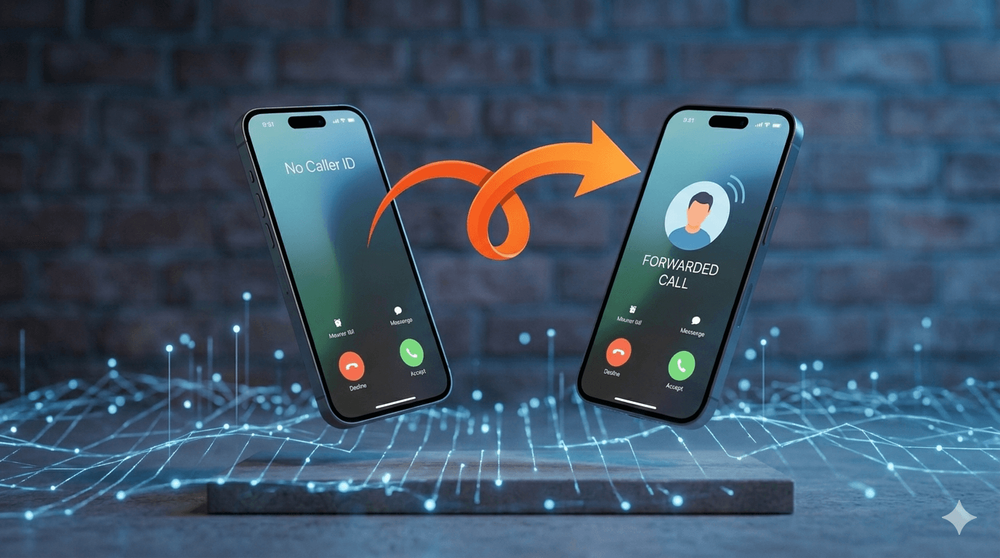
- Apps that unmask private numbers. Apps like Traceback reveal the real number behind private calls using conditional call forwarding. If the person you're calling uses such an app, they may see your number even if you hid it. Here's how it works.
Is It Legal to Call from a Private Number?
Yes. Hiding your number is a regular service offered by telecom companies, and it has completely legitimate uses: doctors and lawyers calling from personal devices, people selling something secondhand who don't want to expose their number, or anyone simply protecting their privacy.
But there's a clear line. Using a phone to harass, intimidate, or threaten is a criminal offense, even when the number is private:
- The Communications Law (חוק התקשורת) sets a penalty of up to 3 years in prison for anyone who uses a telecommunications device in a way that harms, frightens, harasses, creates anxiety, or wrongfully annoys. Courts have applied this section to SMS, WhatsApp, and email as well.
- The Prevention of Intimidating Harassment Law (חוק מניעת הטרדה מאיימת) allows a victim to request a court order prohibiting the harasser from contacting them in any way, including by phone. Violating such an order is a criminal offense.
If you're on the receiving end of harassing private calls, read the complete guide to reporting telephone harassment.
Getting Private Calls? Here's How to Find Out Who's Calling
Often, someone searching for how to call privately is actually receiving such calls and wants to understand how it works. If you're getting calls from a private number and want to know who's behind them:
- What's the difference between a private call and an unknown number
- How to unmask private numbers in Israel
- Can you even call back a private number?
- Does Traceback work with my carrier
Traceback reveals the real number of private calls directly in the app, and you can try it with a free trial period.
FAQs
Does #31# cost money? According to Cellcom's tariff, blocking caller ID for a single call with #31# is free on most devices. The 43* code may be charged by some carriers.
Why does the option to hide my number on iPhone appear grayed out? Because the carrier controls the setting at the network level. Contact your carrier's customer service.
Can I call the police privately? No. On calls to emergency numbers 100, 101, and 102, your number is always displayed.
If I call privately, can my number be discovered? Police can with a court order, and apps that unmask private numbers like Traceback can display it to anyone using them.
Sources
- Cellcom: General Tariff, 2025
- Pelephone: Tariff
- Bezeq: How to Call from a Private Number
- Apple: Hide Caller ID on iPhone
- Samsung: Hide Caller ID
- Kol Zchut: Prevention of Intimidating Harassment Law
- Bizportal / Takdin: Harassment via Communications
- Communications Data Law, 2007
⚠️ Disclaimer: This article is general information only and does not constitute legal advice. For any specific legal situation, consult a qualified attorney. Traceback is not responsible for legal outcomes.
Read also: No Caller ID in Israel: The Complete Guide
Tom Aflalo is co-founder of Traceback, the app that reveals the real number behind hidden and No Caller ID calls. He works on the product and on the guides in this blog and help center, which are checked against how the app actually works.
feedback@trytraceback.com